
1. Inflation and the Cost of Survival
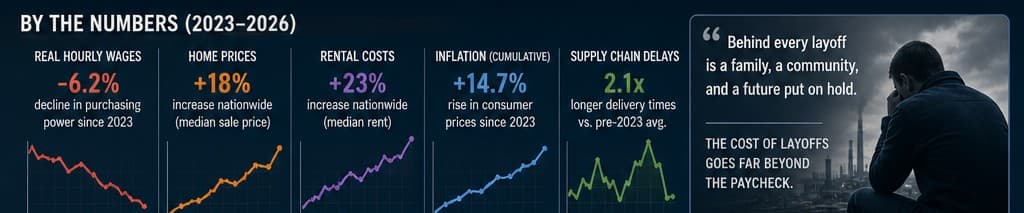
Since 2023, inflation has remained stubbornly high, hovering between 3–5% annually.
Manufacturing plants, especially in automotive and consumer goods, have struggled with rising input costs — steel, energy, and logistics.
When margins tighten, hourly workers are the first to feel the squeeze: overtime hours are cut, temporary contracts end, and production lines slow.
Even those still employed face real wage erosion — a $25/hour wage in 2024 buys less than $22/hour did in 2021.
Result: Workers who once relied on steady factory paychecks now juggle side jobs or shift to gig work to offset living expenses.
2. Housing Market Pressure
The housing market has amplified the pain of layoffs.
Mortgage rates surged above 7%, pricing many hourly workers out of homeownership.
Rent inflation in industrial regions — from Ohio to Tennessee — has outpaced wage growth.
Laid‑off workers relocating for new jobs face limited affordable housing near resurgent manufacturing hubs (like EV battery plants in Georgia or Michigan).
Result: Housing insecurity has become a hidden consequence of manufacturing contraction, forcing families to move farther from work or rely on extended households.
3. Global Conflicts and Supply Chain Disruptions
International wars — notably in Ukraine and the Middle East — have disrupted global supply chains and energy markets.
U.S. manufacturers dependent on imported components or raw materials face unpredictable costs and delays.
Defense‑related industries have expanded, but civilian manufacturing (electronics, automotive, consumer goods) has seen periodic layoffs due to material shortages.
Hourly workers experience boom‑and‑bust cycles: temporary hiring surges followed by abrupt downsizing when supply bottlenecks hit.
Result: Job stability has become cyclical, tied to geopolitical events far beyond workers’ control.
4. The Human Impact
The emotional and financial toll on hourly workers is profound:
Savings depletion: Many used pandemic‑era savings to survive inflation and now face depleted reserves.
Mental health strain: Uncertainty and rising living costs have increased stress and burnout.
Community fragmentation: Towns once anchored by manufacturing plants now depend on logistics or service jobs with lower pay and fewer benefits.
5. Signs of Adaptation
Despite the turbulence, there are glimmers of resilience:
Reshoring initiatives (CHIPS Act, IRA) are creating new technical roles, though they require retraining.
Union negotiations have regained momentum, pushing for cost‑of‑living adjustments.
Local governments are investing in workforce housing and retraining programs to stabilize affected regions.
Conclusion
From 2023 to 2026, manufacturing layoffs have evolved from isolated corporate decisions into a systemic challenge shaped by inflation, housing, and global instability. For America’s hourly workforce, the struggle is no longer just about finding work — it’s about maintaining dignity and security in an economy where every external shock hits home.